
How Lead Gets Into Tap Water
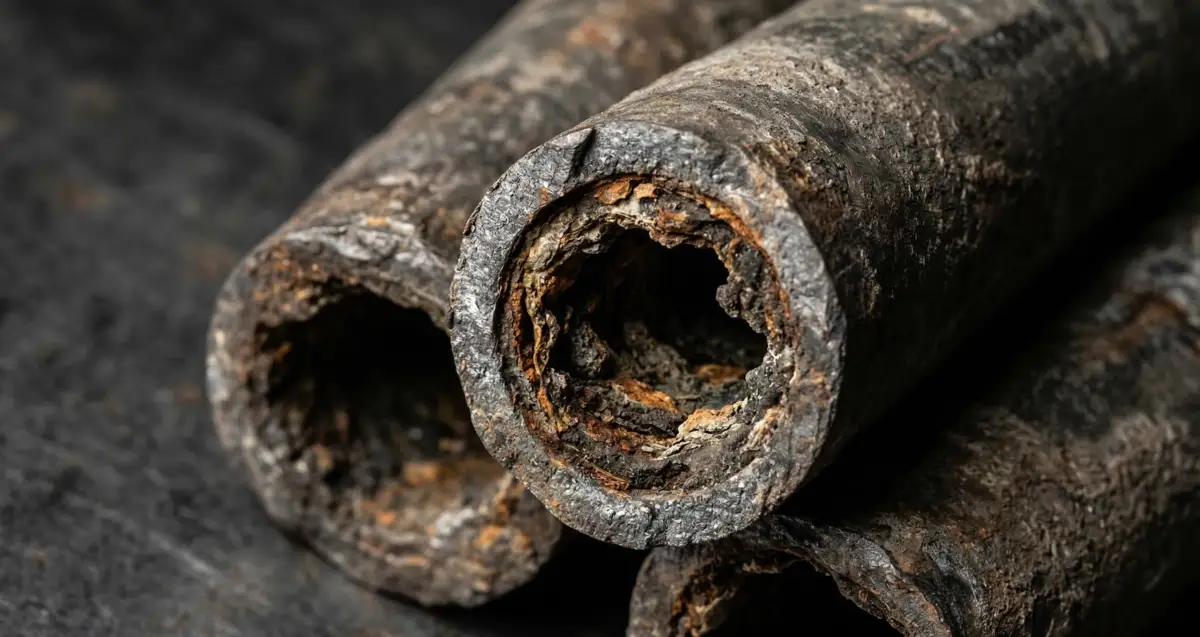
Lead in drinking water doesn’t come from the water source or the treatment plant. It enters your water after treatment, leaching from materials in the distribution system and your home’s plumbing. The primary pathways:
Lead Service Lines (50-75% of Exposure)
Lead service lines (LSLs) are the pipes that connect the water main under the street to the plumbing inside your home. An estimated 9.2 million LSLs remain in use across the United States, according to the EPA’s 2024 national inventory. These pipes are the single largest source of lead in drinking water. Homes connected by LSLs can have lead levels 10 to 100 times higher than homes with copper or plastic service lines.
LSLs were commonly installed before the 1950s. They’re most prevalent in older cities in the Midwest and Northeast — Chicago alone has an estimated 400,000 lead service lines, more than any other U.S. city.
Lead Solder (20-35% of Exposure)
Until 1986, lead solder was routinely used to join copper pipes. The Safe Drinking Water Act amendments of 1986 banned lead solder in plumbing, but any home built before 1986 likely still has it. Lead solder is the second-largest source of lead in residential water, particularly in homes built between 1950 and 1986 where copper pipes with lead-soldered joints replaced older plumbing.
Brass Fixtures and Valves (1-3% of Exposure)
Older brass faucets, valves, and fittings can contain up to 8% lead by weight. The Reduction of Lead in Drinking Water Act of 2011 (effective 2014) reduced allowable lead in plumbing fixtures to 0.25%. But fixtures installed before 2014 may leach small amounts of lead, especially in contact with corrosive water (low pH or low mineral content).
Key Factor: Water Chemistry
Lead doesn’t leach at a constant rate. Corrosive water — characterized by low pH, low alkalinity, and low mineral content — dissolves lead faster. Utilities add corrosion control treatment (typically orthophosphate or pH adjustment) to create a protective scale inside pipes that minimizes lead leaching. When this treatment is disrupted, as happened in Flint, Michigan in 2014, lead levels can spike dramatically.
EPA Lead Regulations
The Lead and Copper Rule
The EPA regulates lead in drinking water through the Lead and Copper Rule (LCR), first established in 1991. Unlike most contaminants, lead does not have a Maximum Contaminant Level (MCL). Instead, it uses an Action Level system:
- Action Level: 15 parts per billion (ppb) at the 90th percentile
- MCLG: Zero — the EPA acknowledges there is no safe level of lead exposure
- Testing method: Utilities collect first-draw samples from homes at highest risk for lead (those with LSLs or lead solder). The 90th percentile of those samples is the reported value.
If more than 10% of sampled homes exceed 15 ppb (meaning the 90th percentile exceeds the Action Level), the utility must intensify corrosion control treatment, increase monitoring, and begin public education.
Lead and Copper Rule Improvements (LCRI) — October 2024
In October 2024, the EPA finalized the Lead and Copper Rule Improvements, the most significant update to lead regulation in over 30 years:
- Mandatory LSL replacement: All water systems must identify and replace 100% of lead service lines within 10 years. This is a dramatic acceleration from the previous rule, which only required replacement of 7% per year after an Action Level exceedance.
- Lower Action Level trigger: The new rule adds a 10 ppb trigger level. Systems exceeding 10 ppb at the 90th percentile must take additional steps, including targeted outreach to homes with the highest levels.
- Service line inventories: All water systems must complete an inventory of service line materials and make it publicly available. This was due by October 2024.
- Improved sampling: The new rule requires first-draw and fifth-liter sampling to better capture lead from both premises plumbing and service lines.
Lead Service Line Inventory
As of October 2024, every water system in the United States is required to have a service line inventory identifying the material of every service line in its distribution system. This is a major new tool for homeowners.
How to Check Your Home
- Check your utility’s inventory: Most utilities have published their inventories online. Search your utility name plus “service line inventory” or “lead pipe map.”
- Use the EPA’s lookup: The EPA maintains links to service line inventories by state at epa.gov/ground-water-and-drinking-water/lead-service-line-inventories.
- Look up your address: Many inventories are searchable by address and will tell you whether your service line is lead, copper, galvanized steel, plastic, or “unknown.”
- Note “unknown” status: Many utilities have classified a large percentage of service lines as “unknown material.” An “unknown” designation doesn’t mean the line is safe — it means the utility hasn’t verified it yet. Homes with unknown service lines should test their water.
Health Effects
There is no safe level of lead exposure. This is not a precautionary statement — it is the scientific consensus, affirmed by the EPA, CDC, WHO, and American Academy of Pediatrics.
Children
Children absorb 4-5 times more lead from the gut than adults. Even blood lead levels below 3.5 micrograms per deciliter (the CDC’s current reference value, updated from 5 in 2021) are associated with:
- Reduced IQ and cognitive function
- Learning disabilities and attention problems
- Behavioral issues including hyperactivity and aggression
- Slowed growth and development
- Hearing problems
The effects are irreversible. There is no treatment that can undo lead’s damage to a developing brain.
Adults
Chronic low-level lead exposure in adults contributes to:
- Kidney damage and reduced kidney function
- High blood pressure and cardiovascular disease
- Reproductive harm (reduced fertility, increased miscarriage risk)
- Cognitive decline and memory problems
- Joint and muscle pain
Pregnant Women
Lead crosses the placental barrier and affects fetal development. Lead stored in bone from prior exposure can be released during pregnancy as calcium demand increases. Pregnant women in homes with lead plumbing should use filtered water for all drinking and cooking.
How WaterVerge Measures Lead
When you search your city on WaterVerge, the lead data you see comes from the EPA’s Lead and Copper Rule monitoring results. Here’s how to interpret it:
- 90th percentile value: This is the concentration at which 90% of sampled homes were at or below. It’s the number utilities report to the EPA and the number compared against the Action Level.
- Sample year: Lead testing occurs on a schedule set by the state — typically every 3 years for systems in compliance, or every 6 months for systems that have exceeded the Action Level.
- What it means for your home: The 90th percentile is a system-wide statistic. Individual homes can have levels far above or below this number depending on their specific plumbing. A system reporting 5 ppb at the 90th percentile may still have individual homes above 50 ppb.
How to Get Your Water Tested
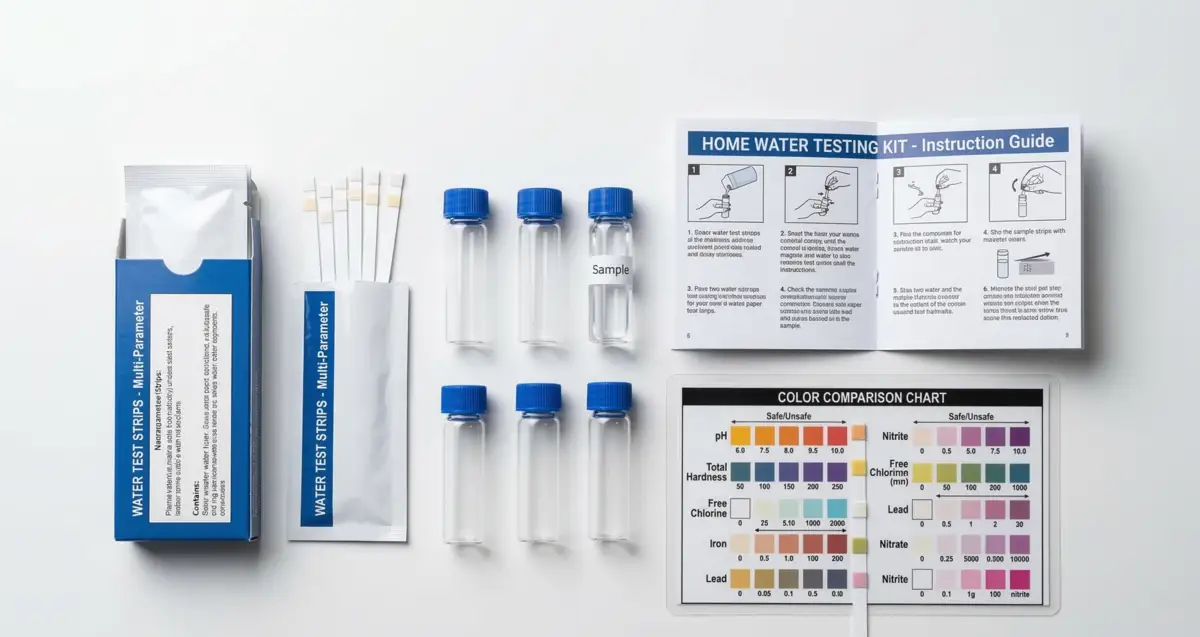
Home testing is the only way to know your actual lead exposure — see our how to test your tap water guide for step-by-step protocols.
Free Utility Testing Programs
Many water utilities offer free lead testing kits to customers, particularly those in older homes or areas with known LSLs. Check your utility’s website or call them directly. Some utilities will send a technician to collect samples at your home.
Mail-In Lab Kits ($20-$50)
Services like Tap Score (SimpleLab) and National Testing Laboratories ship sample collection kits with clear instructions. You collect samples and mail them to a certified lab. Results arrive in 5-10 business days with easy-to-understand reports.
Certified Labs
For the most comprehensive testing, contact a laboratory certified by your state’s drinking water program. State certification ensures the lab follows EPA-approved methods. Your state health department maintains a list of certified labs.
First-Draw vs. Flushed Samples
The most informative test uses two samples:
- First-draw sample: Collected first thing in the morning (or after 6+ hours of no water use) without running the tap. This captures the highest lead concentration — water that has been sitting in contact with your pipes and fixtures.
- Flushed sample: Collected after running cold water for 2-5 minutes. This represents water from the service line and distribution system, after standing water in your home’s plumbing has been cleared.
Comparing the two reveals whether lead is coming from your premises plumbing (high first-draw, low flushed) or the service line (both elevated).
Identifying Lead Pipes in Your Home
You can often identify your service line material without a professional inspection.
Where to Look
Find where the water line enters your home — typically in the basement or crawl space, near the water meter or where the pipe comes through the foundation wall.
The Scratch Test
Use a coin or flathead screwdriver to scratch the pipe surface:
- Lead: Scratched area is shiny silver-gray and the metal is soft (you can indent it with a coin). Lead pipes are also dull gray on the outside, not painted or coated.
- Copper: Reddish-orange or green (patina). Hard surface.
- Galvanized steel: Dull gray, hard surface, may have threaded connections. Note: galvanized pipes that were ever connected to a lead service line can accumulate lead deposits internally, even after the lead line is replaced.
- Plastic (PVC/PE): White, black, or blue. Not metal. Common in newer construction.
The Magnet Test
Hold a magnet to the pipe:
- Sticks: Galvanized steel or iron
- Doesn’t stick: Lead or copper
If the pipe is lead (shiny when scratched, non-magnetic, soft), contact your utility about replacement programs.
Removing Lead from Your Water
Reverse Osmosis (95-99% Removal)
Under-sink RO systems are the most effective home treatment for lead. They push water through a semipermeable membrane that blocks lead particles and dissolved lead ions. RO also removes many other contaminants including PFAS, arsenic, and nitrate. See our best reverse osmosis systems guide for tested picks.
- Cost: $150-$400 installed
- Annual maintenance: $50-$80 (membrane and pre-filter replacement)
- Drawback: Produces wastewater; treats only one faucet
NSF 53-Certified Pitcher Filters
Pitchers certified under NSF/ANSI Standard 53 are proven to reduce lead from 150 ppb to below 10 ppb. Top options include Clearly Filtered ($90, 99.5% reduction), Brita Elite ($35, 99% reduction), and PUR Plus (~$25, 99% reduction). See our filter pitcher guide for detailed comparisons.
Faucet-Mount Filters
PUR and Brita faucet-mount filters with NSF 53 certification provide on-demand filtered water without a separate pitcher. They’re convenient but have shorter filter life (100 gallons vs. 120+ for pitchers) and can reduce water flow rate.
Whole-House Systems
For homes with lead service lines where exposure occurs throughout the plumbing, a whole-house lead filtration system (typically using KDF media or catalytic carbon) provides protection at every tap, including showers. Cost: $1,000-$3,000 installed. See our best whole-house water filters and best under-sink water filters for specific certified products.
Quick Protection Tips
While you arrange for testing or filter installation, these steps immediately reduce lead exposure:
- Flush for 30 seconds to 2 minutes before drinking or cooking. If your home has a lead service line, flush for 3-5 minutes. This clears standing water that has been in contact with lead materials.
- Use cold water only for drinking, cooking, and especially baby formula preparation. Hot water dissolves more lead from pipes and fixtures — never use hot tap water for consumption. See our baby and infant water safety guide for formula-prep specifics.
- Clean faucet aerators monthly. Lead particles accumulate in the screens. Remove the aerator, soak in vinegar, rinse thoroughly, and replace.
- Don’t boil to remove lead. Boiling concentrates lead by evaporating water while the metal remains. Always filter instead.
- Run water after long absences. If you’ve been away for days or weeks, flush all taps for several minutes before using water for drinking or cooking.
Lead Service Line Replacement Programs
The 2024 LCRI requires all water systems to replace their lead service lines within 10 years. Many cities already have active programs:
Fully Funded Programs
Cities including Newark (NJ), Denver (CO), and Milwaukee (WI) have replaced thousands of lead service lines at no cost to homeowners, using a combination of federal infrastructure funds, state revolving funds, and utility rate revenue. Newark replaced over 23,000 LSLs in under three years.
Cost-Sharing Programs
Some utilities cover the public side of the service line (from the main to the property line) while homeowners pay for the private side (from the property line to the house). The homeowner’s portion typically costs $2,000-$5,000 depending on line length and soil conditions.
Federal Funding
The Bipartisan Infrastructure Law (2021) allocated $15 billion specifically for lead service line replacement. Additional funding is available through the EPA’s Drinking Water State Revolving Fund. Ask your utility what funding sources are available.
Important Warning: Partial Replacement
Replacing only the utility-owned portion of a lead service line (a “partial replacement”) can temporarily increase lead levels by disturbing the pipe and breaking up the protective scale layer. If your utility offers only partial replacement, ask about programs that cover the full line. If you must accept a partial replacement, install a certified filter and test your water monthly for 6-12 months afterward.
Guidance for Renters
Renters face unique challenges with lead in water — you don’t own the plumbing and may not be able to make permanent changes. See our water filters for renters guide for landlord-friendly options. Here’s what you can do:
- You have the right to know. Ask your landlord for water test results. Check your utility’s service line inventory for your building’s address. Many cities publish this information online.
- Test independently. A $25-$50 mail-in lab test doesn’t require landlord permission and gives you tap-specific data. Collect a first-draw sample from your kitchen faucet.
- Use a filter pitcher. A $30-$40 NSF 53-certified pitcher provides immediate protection at your drinking water tap. This is the single most impactful step a renter can take.
- Document everything. If test results show lead above 15 ppb, notify your landlord in writing (email creates a paper trail). In many states and cities, landlords have a legal obligation to address lead hazards. The specific requirements vary by jurisdiction — check your local tenant rights organization.
- Contact your utility. Your water utility can tell you whether the service line to your building is lead, regardless of whether your landlord cooperates. Some utilities offer free testing to renters.
- Know your local laws. Some cities (including Chicago and Washington, D.C.) have enacted specific protections requiring landlords to provide lead-free drinking water or install filters. Check your local housing authority’s website.
Check your water quality
See what contaminants are in your city's tap water and get personalized filter recommendations.